





With One Voice - December 2025
Available in French, Spanish, and Portuguese
As we wrap up 2025, With One Voice looks back at the CIAM General Assembly in Johannesburg through the eyes of Thando Nyameni. Learn about important updates across Australia that are cause for celebration for creators. Finally, powerful and moving reflections from a visit to Soweto from Eddie Schwartz.
Finally, happy holidays to every songwriter, composer, producer, musician, and creator across the globe! May 2026 be as creative and inspiring as ever!
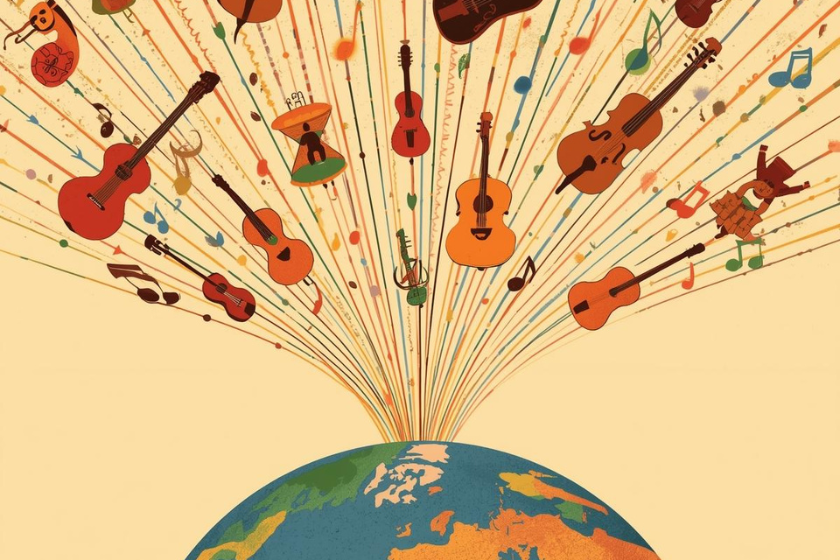
Reflections on the 2025 CIAM General Assembly in South Africa
Thando Nyameni, CIAM ExCo Member & CAPASSO Board Member
This year’s CIAM General Assembly, held in Johannesburg from 22–23 October, was a truly inspiring moment for me and for many African creators. It was only the second time the Assembly had come to Africa. Hosting it in South Africa made the experience feel even more personal. There was a real sense that our continent’s voices, stories, and challenges are finally being heard in global music spaces.
Leaders at CIAM and CAPASSO opened with warm and powerful remarks, reminding us how fast the African music scene is growing and how important it is to protect the people who make the music. I had the honour of introducing Mama Yvonne Chaka Chaka, who encouraged us to fight for fair pay, better access to opportunities, and stronger relationships with government. The conversations that followed touched on the realities we all face —navigating digital changes, broadcasting challenges, and understanding how AI might affect our creative work.
The need to support the everyday experiences of artists permeated the Assembly. I moderated the African Creators panel, where we spoke openly about learning our rights, moving more freely across the continent for work, and making sure creators are paid properly. The SongHub sessions showed how collaboration can spark new ideas and new income streams.
In the CAPASSO AI Dialogue, we unpacked what Generative AI means for musicians and how we can protect our creativity as technology evolves. We ended the week by celebrating backing vocalists and session musicians — the unsung heroes of many recordings – through the BVSM Awards Ceremony hosted by Yvonne Chaka Chaka.
Overall, the Assembly reminded us all that African creators are powerful, innovative, and constantly shaping the global music industry.
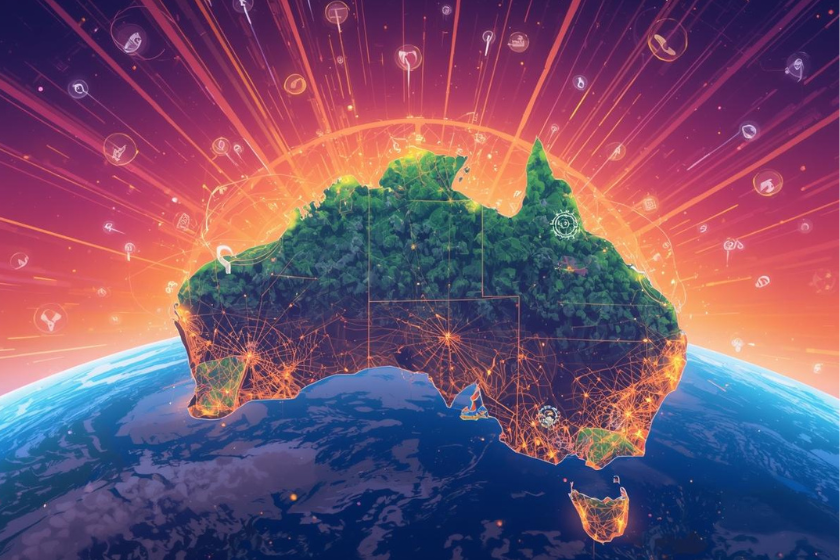
Creators across Australia celebrate wins over content and AI copyright rules
Creators in Australia can celebrate on two fronts these months as the Albanese Labor Government introduced Australian content obligations for video streaming services and have also decided to reject copyright law changes that would have allowed tech companies to mine creative works for training AI without remuneration.
New content requirement legislation in Australia now require those companies with over one million subscribers to invest at least 10% of total local expenditure or 7.5% of revenue in local drama, children’s, documentary, arts and educational programming. Not only will this investment support local creators and the sector, but it will also “help us better understand ourselves, our neighbours, and allows the world to see us” according to Minister for the Arts Tony Burke.
The government has also rejected changes that would have legalized scraping creative works, without compensation, for training AI tools. APRA AMCOS CEO and CISAC Chair Dean Ormston said, “This is a significant moment for Australian creators and our cultural sovereignty. The Australian Government has recognised that Australia’s world-leading licensing framework is the pathway to ethical AI development, not a barrier to innovation.”
An Afternoon in Soweto
Music Creators North America President Eddie Schwartz
I’ve just returned from a trip to Johannesburg, South Africa. I was there primarily for CIAM’s annual General Assembly, but having some free time on my hands, I used it to visit Soweto, the township where many of the leaders of the anti-apartheid movement lived, and the area where some of the horrific events that characterized that long struggle for freedom and equality took place.
As I visited the small home of Winnie and Nelson Mandela and their children, and then walked through the area to the nearby Apartheid Museum, I was very fortunate to have the companionship of a remarkable gentlemen, Nxolisi, who lived nearby, and who shared his insight into the events that led to the end of that oppressive regime.
Among leaders of the movement, he spoke about the role of Steven Biko, and later, I read Mr. Biko’s words at the museum. I found them very moving, and insightful in regard to how those on the “wrong” side of an overwhelming power imbalance must recalibrate how they see themselves:
“The most potent weapon of the oppressor is the mind of the oppressed.”
I found this a compelling statement, and one that spoke to me in a very personal way about the role I play, or can play in the world I find myself in at this moment. As a songwriter and artist it made me think about the role music plays, or can play at times when we may need to stand up and be counted.
I grew up in a household where the songs of legendary folk singers Woody Guthrie and Pete Seeger were often in the air, declaring the power vested in all people – “the common folk” – not those who would force their will upon us.
Steven Biko, and yes, Woody Guthrie and Pete Seeger were up against challenges much harsher and more difficult than anything I have experienced in my life. But given current circumstances, it strikes me as entirely appropriate to be thinking about what it will take to get us to a better place, both at home and around the world.
Bending the arc of history toward justice has always been a long game, and that’s not going to change any time soon. Empowering ourselves to stand up for the dignity and rights of all people, with decency and compassion for all will be necessary, and I humbly submit that music can play an important role in fortifying, uniting and inspiring us on the journey as it has in the past, and most certainly can now and in the future.
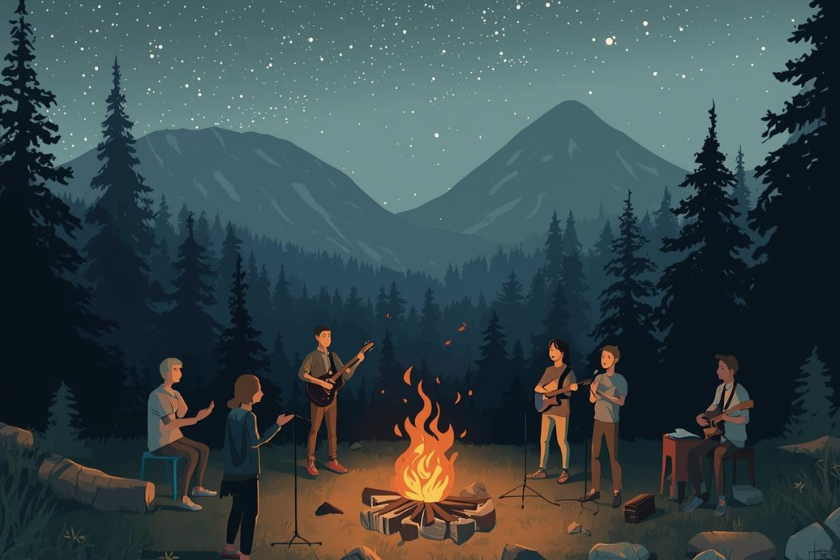
In my mind’s eye I see a campfire, and standing there are two people, Woodie Gutherie with his “This machine kills Fascists” guitar, and Steven Biko.
They’re passionately singing Woodie’s most famous song – but each man sings about two places a world apart, South Africa and America –
“This land is your land, this land is my land, this land was made for you and me”
They could well be raising their voices in song about anywhere in the world where people seek freedom and justice, and a better life.